
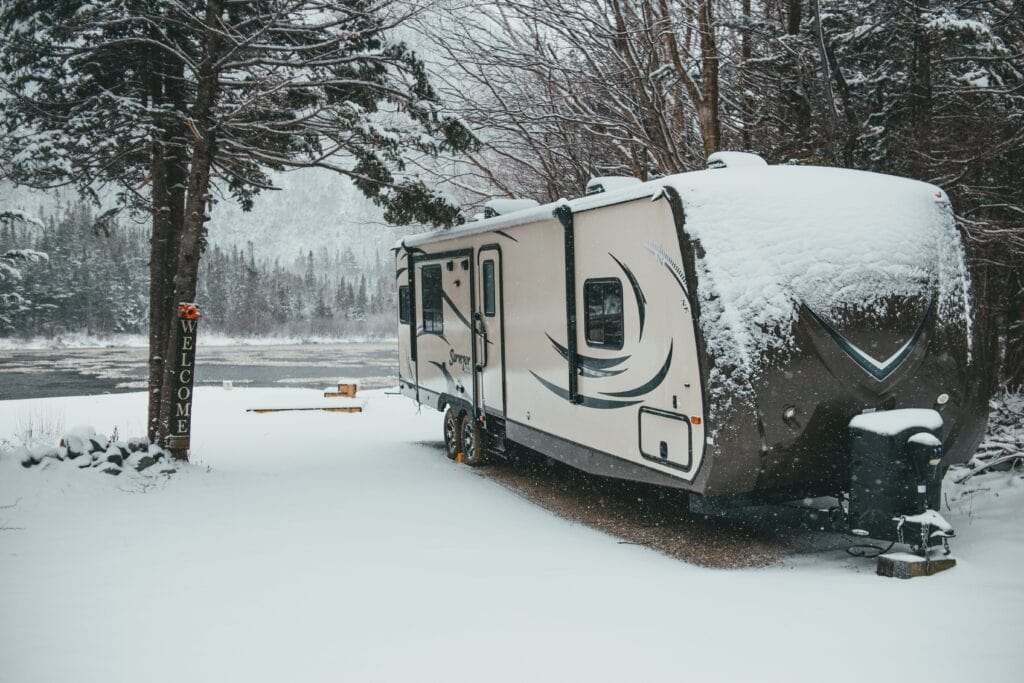
Winterizing your RV on the Texas coast looks different from getting a rig ready for winter in Michigan or Colorado. If you’re staying at Coastal Cowboy RV Park through the winter, you usually don’t need to drain the entire plumbing system, fill the lines with antifreeze, and button everything up until spring. You do need a plan for the occasional cold night, along with a routine for salt air and winter moisture. The dividing line is simple: if you’re living in the RV with the heat running, keep the plumbing live and prepare when a freeze is coming. If the rig will sit unattended or without heat for an extended stretch, full winterization makes more sense.
Do you need to winterize your RV on the Texas Gulf Coast?
Usually, no, not in the same way you would winterize an RV that will spend months parked in a northern climate. An occupied rig with the heat running generally needs freeze protection on cold nights rather than a season-long shutdown of the plumbing system. That doesn’t mean the coast can’t get seriously cold. During the February 2021 Texas freeze, every county in Texas, all the way to the Rio Grande, was placed under a Winter Storm Warning, and the National Centers for Environmental Information called it the state’s coldest winter storm since December 1989.
More recently, the NWS recorded six days at or below freezing in nearby Corpus Christi in January 2026, including a low of 24°F on January 26. That’s a good example of what RV winter preparation in a mild climate actually means: you don’t have to prepare for months of continuous freezing weather, but you do need to be ready when colder weather reaches the coast.
What winterizing steps can you skip in a mild Gulf Coast climate?
If you’re living in your RV and keeping it heated, you can generally skip many of the long-term storage steps that make sense farther north. That usually means you don’t need to flush the entire plumbing system with RV antifreeze for the season, drain the fresh, gray, and black tanks and leave them empty all winter, pull the batteries for months of cold storage, or install heavy-duty insulated covers designed for prolonged freezing conditions.
Those steps aren’t wrong. They’re simply meant for a different situation. Skirting is similar: it’s rarely necessary for an occupied RV here, but check with the park office before installing any.
What should you do before a cold night on the Texas coast?
When freezing weather is in the forecast, protect the exposed parts of the water system and keep heat moving through the RV. Start by watching NWS Corpus Christi when colder weather approaches. Protect the water hose and spigot with a heated hose, or disconnect and drain the hose, fill the fresh tank, and use the RV’s pump overnight. These water and sewer hookup basics can help if you need a refresher on switching your setup. Open cabinet doors beneath sinks on exterior walls so warm interior air can reach plumbing tucked inside those spaces.
Keep the furnace running and check your propane supply before the colder air arrives, since you’ll likely use more than usual. Cold snaps can add up, so it’s worth budgeting for propane through the winter. Electric space heaters can also add a substantial load to an RV electrical system, so know how to plan your electrical load before plugging one in. Check exterior filters and outdoor showers for trapped water, keep your tank valves closed, and review your owner’s manual for model-specific freeze protection instructions.
When should you fully winterize your RV instead?
Fully winterize when the RV will sit unattended, go into storage, or remain without heat during winter weather. This is especially worth considering if you’re leaving the rig behind for several weeks and won’t be there to respond when a cold front is forecast. Two common methods are blowing water from the plumbing system with compressed air and pumping RV antifreeze through the appropriate lines, but the exact process varies by RV.
If you use antifreeze, choose a product specifically approved for RV potable-water systems. Automotive antifreeze is poisonous and isn’t suitable for an RV’s fresh-water plumbing. Your own RV manufacturer’s instructions and owner’s manual should determine the steps for your particular plumbing system.
How do you protect your RV from salt air over the winter?
Salt-air protection shouldn’t stop because the weather has cooled off. Salt continues settling on an RV near the coast year-round, and a rig that stays parked in one place for weeks can be especially easy to overlook. Give the exterior a good layer of protection before winter, then continue rinsing away salt residue through the cooler months and pay attention to hinges, locks, fasteners, and other exposed hardware where corrosion can begin.
The full salt-air corrosion prevention routine covers the washing, waxing, and hardware-care details. If the RV will be parked and covered for a while, use a breathable cover rather than one that traps moisture against the exterior, and keep the broader steps for protecting an RV from coastal salt and sand in mind.
How do you control humidity inside your RV during a Gulf Coast winter?
Winter humidity can sneak up on you because the air conditioner, which pulls moisture out of the air in summer, often stays off. Meanwhile, warm indoor air meeting cooler windows and exterior walls creates condensation, so damp windows and moisture in cooler corners can become more noticeable even though the weather outside feels more comfortable.
Heating choices matter too. An RV’s built-in ducted furnace vents its combustion exhaust outside, while unvented propane heaters can add moisture to the indoor air. If you use one, follow the manufacturer’s directions, maintain the required ventilation, and make sure the carbon monoxide detector is working. For a parked RV, moisture absorbers or a small dehumidifier may help, and it’s worth checking inside after rainy fronts. The same habits used for managing condensation and moisture inside your RV still apply during winter.
What should you check before the first winter norther?
Before the first strong norther comes through, secure anything outside that doesn’t handle gusty wind well. Retract the awning when conditions call for it, and make sure chairs and other loose gear won’t shift or blow around. The same principles used for securing awnings and outdoor gear in coastal wind apply when winter fronts move through.
It’s also a good time to look over roof seams and sealant before winter rain exposes a small leak.
Frequently asked questions
Does it freeze in Rockport, Texas?
Occasionally. Most winter nights stay above freezing, but the Coastal Bend saw a hard freeze as recently as January 2026, so it pays to watch the forecast and have a cold-night routine ready.
Do I need a heated water hose on the Texas coast?
A heated hose isn’t required to get through a Gulf Coast winter, but it can be convenient for an occupied RV. It lets you keep the city-water connection in place during some cold-weather situations without relying on an unprotected standard hose.
The alternative is the freeze-night switch to your fresh tank described above. Which works better depends on your rig and how often you want to change setups.
Can I leave my RV hooked up to water all winter?
You can stay connected on most winter days. When a freeze is forecast, protect the hose and spigot or switch to the fresh tank overnight.
Don’t assume the outside water connection is protected just because the heated interior of the RV is comfortable. Exposed hoses, filters, fittings, and spigots can face colder conditions than the plumbing inside the rig.
Is RV antifreeze safe to use?
RV-approved non-toxic antifreeze is made for winterizing potable-water systems when it’s used according to the product and RV manufacturer’s instructions. Automotive antifreeze is different: it’s poisonous and should never be used in an RV drinking-water system.
Should I put skirting on my RV for a Gulf Coast winter?
Usually, skirting isn’t necessary for the kind of winter weather the Texas coast typically gets. If you still want to add skirting, ask the park about its rules before installing it, and don’t assume a particular type or installation method is permitted at every property.
Contact Us Today!
Thinking about spending the winter on the Texas coast? Coastal Cowboy RV Park has locations in Aransas Pass, Bayside, Fulton, and Rockport. Call (361) 226-1389 to find the location that works for your winter stay.