
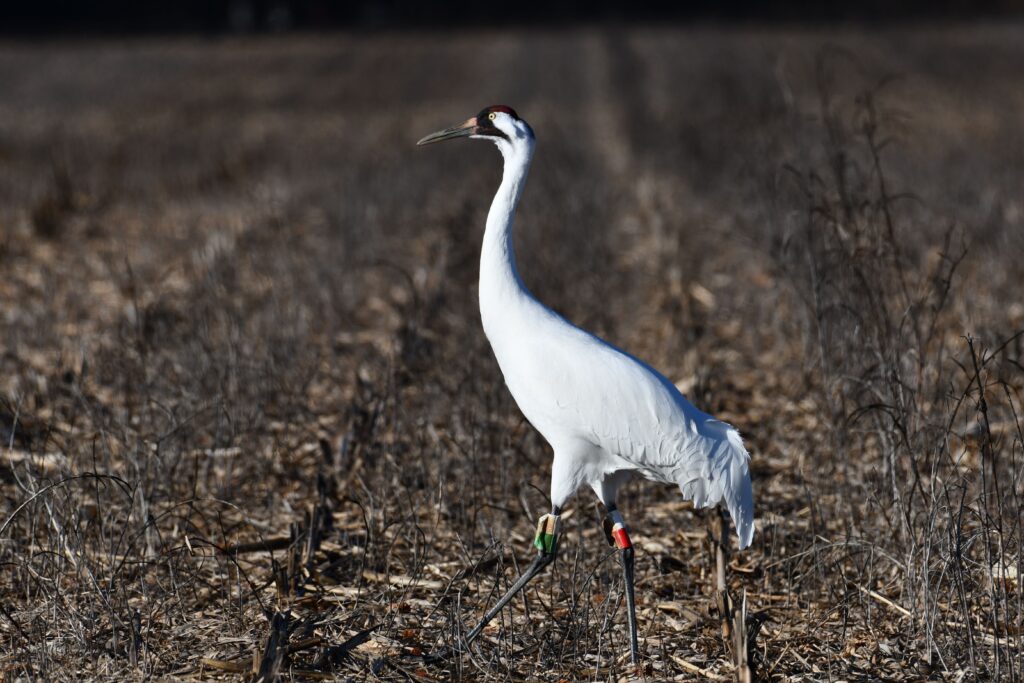
Fall birding on the Texas coast runs roughly from September through November, with the first whooping cranes generally reaching the Aransas area in late October and most birds arriving between late October and mid-November. For RV travelers, that makes fall more than an early version of winter birding. September brings hummingbirds and raptor migration, October keeps passage birds moving through the Coastal Bend, and November adds more waterfowl as the crane population builds.
When Do Whooping Cranes Arrive at Aransas in Fall?
The Aransas-Wood Buffalo population begins its southbound migration in September, and U.S. Fish and Wildlife Service documents say most birds reach their Texas wintering grounds between late October and mid-November. That means a late-October visit can look very different from a December trip. Early in the season, fewer cranes have arrived, and the winter population is still building rather than fully settled.
Those early arrivals also tend to be spread across the coastal marshes because pairs and family groups establish and defend winter territories. A visitor may need more patience and a wider scan of the habitat than later in the season. This article stays focused on fall arrival. For refuge logistics, viewing locations, and seasonal tour information, use our full whooping crane viewing guide.
What Birds Migrate Through the Texas Coast in Fall?
Rockport-Fulton and the Aransas area sit along a major migration corridor, a broad seasonal route birds use while moving between breeding and wintering grounds. Ruby-throated hummingbirds are one of the easiest fall movements for casual visitors to notice, and the Rockport-Fulton HummerBird Celebration is held each September around that migration. Raptors move through the region, too. About an hour from Rockport-Fulton, Hazel Bazemore County Park near Calallen hosts the Corpus Christi HawkWatch, where Broad-winged Hawks can pass in large numbers during peak fall movement. Because of the distance, treat Hazel Bazemore as a birding day trip rather than a quick Rockport-Fulton stop.
Waterfowl become a bigger part of the picture as the season cools. Blue-winged teal are early fall migrants, while green-winged teal, northern pintails, northern shovelers, and American wigeon become part of the later fall mix. Beginners can keep identification simple: look for the long neck and pointed tail of a male northern pintail, the gray body of a sandhill crane compared with the mostly white adult whooping crane, and the flash of red on an adult male Ruby-throated Hummingbird. Sandhill cranes are especially worth learning because visitors regularly mistake them for whooping cranes.
Where Can You Go Birding Near Rockport and Bayside?
Aransas National Wildlife Refuge is the main destination for a fall birding day. From Coastal Cowboy RV Park’s Bayside location, allow roughly 40 to 45 minutes to reach the refuge entrance at 1 Wildlife Circle in Austwell, using State Highway 35, Farm to Market Road 774, and Farm to Market Road 2040. Once there, Wildlife Drive, Heron Flats Trail, Jones Lake Platform, and the observation towers give beginners several ways to look for birds without specialized equipment. The visitor center is currently open Tuesday through Saturday from 9 a.m. to 4 p.m., while the auto tour and trails are open daily from sunrise to sunset.
Goose Island State Park is a short drive from Coastal Cowboy’s Rockport location and is reached from State Highway 35 via Park Road 13. It gives visitors a mix of bayfront and woodland birding, and our Goose Island State Park half-day guide can help you plan the stop. Rockport Beach Park is another nearby choice, with a bird sanctuary on the west side and the Bayside Walking Path at Rockport Beach along Little Bay. From Coastal Cowboy’s Bayside property, the Copano Bay shoreline and tidal flats are only minutes away. Our guide to birdwatching hotspots within 15 minutes of Bayside covers more close-to-camp options.
What Should You Bring for Fall Birding on the Texas Coast?
You do not need a spotting scope to enjoy a first birding trip here. An 8×42 pair of binoculars is a practical starting point. The 8 means eight-power magnification, while 42 refers to the diameter of the front lens in millimeters. That combination is popular for birding because it gives useful magnification while keeping a wide enough field of view to find and follow moving birds. A field guide or bird-identification app can handle much of the rest.
Pack for Gulf Coast fall conditions, not winter. September can still be hot and humid, so bring water, sunscreen, a hat, and insect repellent, especially around marshes and tidal flats. A light rain layer and a dry pouch for your phone or optics are useful when coastal showers move through. By November, a light extra layer can help on breezy mornings after a front, but heavy cold-weather gear belongs in the winter guide.
How Should You Plan a Fall Birding Trip Around Your RV Stay?
Start birding early. The first part of the morning is usually more comfortable before September heat builds, and wildlife along the Aransas Refuge tour loop can be more active early in the day. Check current refuge access before leaving camp, and reserve a Goose Island day-use pass in advance if that park is on your itinerary because Texas Parks and Wildlife says the park often reaches capacity. Leaving some flexibility in your schedule also helps when wind, rain, or a passing front changes bird activity.
Choose the part of fall that matches what interests you most. Early fall emphasizes migration, while later fall adds more wintering waterfowl and increasing crane activity. As birding season picks up, reserving preferred RV dates ahead of time can give you more flexibility in where you stay. If you are weighing the season as a whole, our guide to fall RV travel on the Texas coast covers the broader reasons to visit.
Book Your Fall Birding Stay
Coastal Cowboy RV Park gives birding travelers two useful bases for this itinerary. The Bayside location works well for Copano Bay and access north toward Aransas National Wildlife Refuge, while the Rockport location is convenient for Rockport Beach Park and Goose Island State Park. Choose the property that best matches the places you want to bird, then reserve your fall dates.
Frequently Asked Questions
When is fall birding season on the Texas coast?
Fall birding on the Texas coast runs roughly from September through November. September emphasizes active migration, while October and November bring more wintering waterfowl and the start of whooping crane season around Aransas.
When do whooping cranes arrive at Aransas National Wildlife Refuge?
Most whooping cranes reach their Texas wintering grounds between late October and mid-November, although timing varies from year to year. Early-season visitors should expect fewer cranes and a more spread-out population than they would see later in winter.
What fall migrants can beginners look for around Rockport-Fulton?
Ruby-throated hummingbirds are a recognizable early fall migrant, while Broad-winged Hawks move through South Texas during raptor migration. As fall progresses, ducks such as northern pintails, green-winged teal, and northern shovelers add to the mix.
Can beginners bird at Aransas without a spotting scope?
Binoculars are enough to enjoy Wildlife Drive, trails, viewing platforms, and many of the larger birds along the coast. An 8×42 pair is a versatile beginner choice.
How can you tell a whooping crane from a sandhill crane?
Adult whooping cranes are mostly white with a red crown and black wing tips visible in flight. Sandhill cranes are gray overall, so body color is one of the easiest differences for a beginner to notice.