
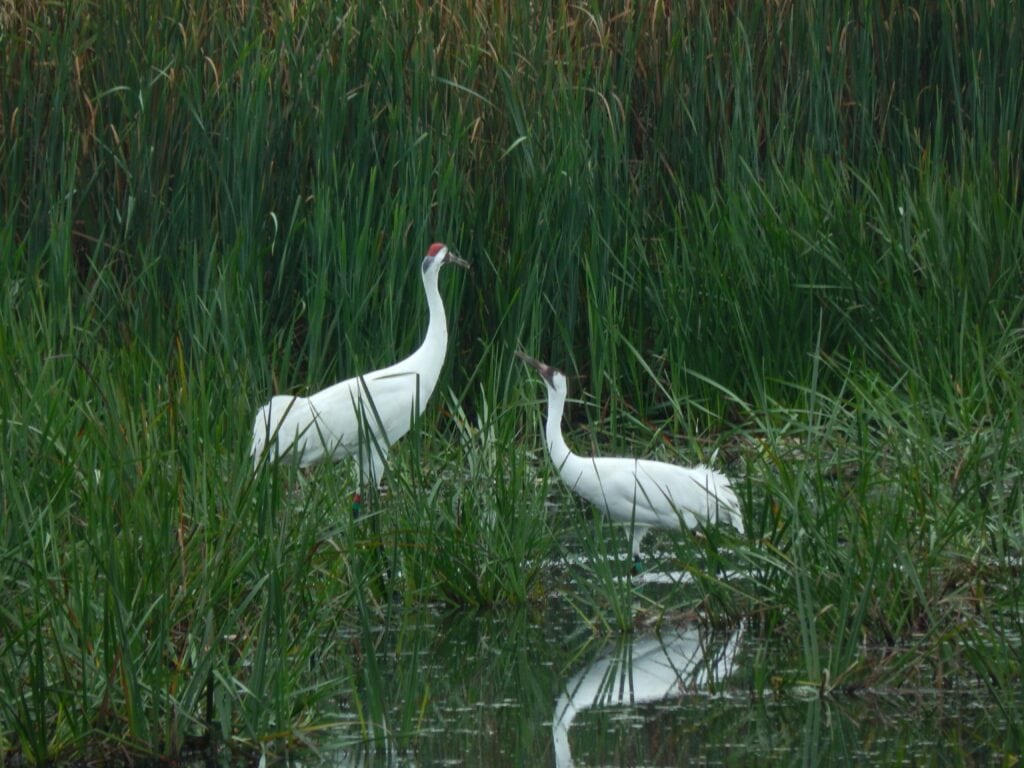
Whooping cranes can be seen at Aransas National Wildlife Refuge from roughly late October through mid-April, making it the only place in the world where you can reliably observe the last naturally occurring wild flock of this species. Standing five feet tall with a wingspan of seven and a half feet, they are among the most striking birds in North America, and the refuge near Rockport puts you closer to them than anywhere else on earth. If whooping crane viewing is on your list, fall and winter is the window, and this stretch of the Texas Gulf Coast is where you go.
Why is Aransas the Best Place to See Whooping Cranes?
Aransas National Wildlife Refuge encompasses more than 115,000 acres of diverse coastal habitat along the Texas Gulf Coast. It is best known as the wintering home of the last wild flock of endangered whooping cranes. The refuge’s marshes, tidal flats, and bay waters provide exactly what the cranes need: blue crabs and wolfberries as their primary food sources, shallow water for foraging, and space to establish the family territories they maintain throughout the winter season.
The 2024-2025 wintering season set a record, with a survey estimate of 557 whooping cranes on and around the refuge, the first time the Aransas-Wood Buffalo population has exceeded 550 individuals. That population once numbered only 21 birds. The recovery is one of the more remarkable conservation stories in American wildlife history, and watching these birds in person gives that story a weight that a documentary cannot fully deliver. The Texas Coastal Bend is the only place where you can see the world’s last naturally occurring population of whooping cranes.
When to Visit: The Migration Calendar
Whooping cranes typically arrive at Aransas in late October and depart by mid-April. That six-month window is your planning framework, but the timing within that window matters for what you experience. Early in the season, between Thanksgiving and Christmas, Rockport-Fulton offers excellent weather, prime birding conditions, and smaller crowds. Early arrivals are establishing territories, juveniles are still learning from their parents, and the full flock has not yet compressed into its winter range.
January and February bring the largest concentrations of birds at the refuge, which means more sightings from both the tour loop and the boat. March is the transition month: numbers begin to thin as the cranes start moving north, but the birds that remain are often easier to observe because the vegetation is lower and the bay water is clear. If you are planning a trip specifically around crane viewing, November through February is the strongest window. The article on off-season RV travel on the Coastal Cowboy site makes a solid case for exactly this kind of fall and winter trip.
Getting to the Refuge from Coastal Cowboy
Aransas National Wildlife Refuge is approximately 30 minutes from the Rockport-Fulton area. From Coastal Cowboy’s Bayside location, you are even closer, putting the refuge entrance within easy reach for a morning outing without an early wake-up. The drive itself takes you through some of the most scenic coastal terrain in South Texas, following State Highway 35 north before turning onto Farm to Market Road 774 toward the Blackjack Peninsula.
The refuge visitor center is open Wednesday through Sunday from 9:00 AM to 4:00 PM and is closed on Mondays, Tuesdays, and federal holidays. The auto tour loop and trails are open daily from sunrise to sunset. When the visitor center is closed, a registration kiosk is available outside, and payment is cash only if you do not have a federal lands pass. Checking the U.S. Fish and Wildlife Service website before your visit is the best way to confirm current hours and any seasonal access changes.
Best Viewing Spots Inside the Refuge
The 16-mile Wildlife Drive is the primary self-guided option inside the refuge and is accessible by vehicle, making it manageable for visitors of all ages and mobility levels. The drive follows the edge of the bay system and crosses through several habitat types, each producing different species. Observation platforms along the route provide elevated sightlines across the marshes, and the cranes are large enough to spot at a distance that you would miss most other species entirely.
The refuge trails extend the experience for visitors who want to get out of the vehicle and cover more ground on foot. Heron Flats Trail, which leads to a viewing platform over the bay, is one of the better spots for crane sightings from land when the birds are foraging on the tidal flats nearby. For wildlife you may encounter anywhere on the refuge property, the wildlife safety while RV camping guide covers how to approach wildlife encounters on the Texas coast responsibly.
Boat Tours from Rockport-Fulton
A boat tour gives you access to the bayside shoreline of the refuge that the auto loop does not reach, and for many visitors, it is the single best way to see cranes in the wild. Two well-established operators run tours out of the Rockport-Fulton area during crane season.
Rockport Birding and Kayak Adventures has been operating since 2003 under Captain Tommy Moore, running three-hour whooping crane and coastal birding cruises aboard the Skimmer. Tours cruise into prime whooping crane viewing areas along the refuge waterfront, with the chance to see 30 to 60 different species of birds and other wildlife during a single trip. Aransas Bay Birding Charters departs from Sea Gun Marina on the Lamar Peninsula and runs both morning and afternoon tours along the Intracoastal Waterway and the refuge shoreline, with boats specifically designed for photographers featuring multiple deck levels at different elevations. Both operators run tours throughout the seasonal window; booking ahead is strongly recommended for peak winter weekends.
What to Bring for a Successful Viewing Day
Binoculars are worth having even though whooping cranes are large birds. An 8×42 pair is the standard recommendation for general wildlife viewing and works equally well from the auto tour loop and the boat. Polarized sunglasses cut the glare significantly on a boat tour and make spotting birds on the water much easier. A camera with a longer zoom lens is worthwhile if you have one, particularly for the boat tours where the guides position the vessel for close approaches.
Layers are the practical wardrobe choice for a winter morning on the water or walking the auto tour. The Texas coast can be mild in December and genuinely cold in January, and bay wind makes temperatures feel lower than the forecast suggests. Water, sun protection, and snacks round out the practical list for a half-day outing. The cranes are wild animals, and sightings are never guaranteed, but the refuge’s consistent crane population and the local guides’ knowledge make Aransas one of the more reliable wildlife-viewing destinations in the country.
Book Your Crane-Season Stay
The fall and winter crane season fills up faster than most visitors expect. Securing your site at Coastal Cowboy before the season starts puts you in the best position to plan around the viewing window that works for you. Book your stay through our website.
Frequently Asked Questions
When do whooping cranes arrive at Aransas?
Whooping cranes typically begin arriving at Aransas National Wildlife Refuge in late October and depart by mid-April. The largest concentrations are present from November through February, making that window the most reliable for viewing.
How rare are whooping cranes?
Whooping cranes are among the rarest birds in North America and remain listed as an endangered species. The wild Aransas-Wood Buffalo flock reached a record estimated population of 557 birds during the 2024-2025 wintering season, a significant recovery from a low of fewer than 25 birds in the 1940s.
Can I see whooping cranes without a boat tour?
Yes. The 16-mile Wildlife Drive auto tour loop and the refuge’s walking trails provide land-based viewing opportunities, and cranes are regularly spotted from the observation platforms and bay overlooks along the route. A boat tour gets you closer to the bayside habitat the cranes prefer, but it is not required for a sighting.
What should I bring to see whooping cranes?
Binoculars, layers appropriate for cool coastal weather, water, and sun protection cover the basics for both the auto tour and a boat trip. A camera with a zoom lens is worthwhile if you have one. Polarized sunglasses are particularly useful on the water. Booking boat tours in advance during peak winter months is strongly recommended.