
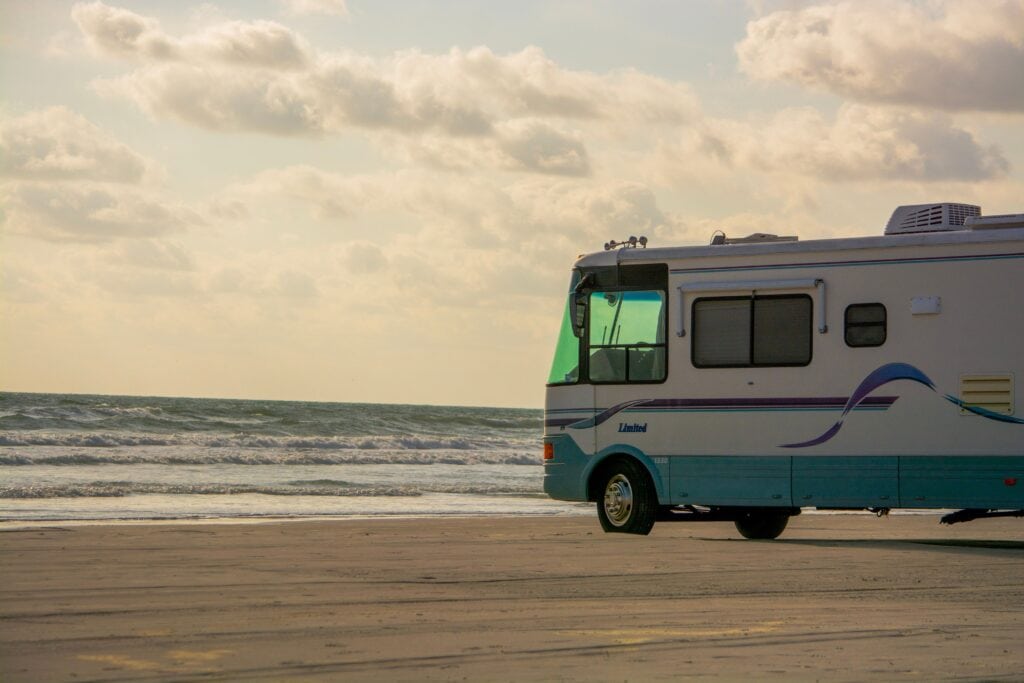
If you are RVing on the Texas coast during hurricane season, make an evacuation plan before a storm threatens, keep your rig ready to move, and leave when local officials issue a mandatory evacuation order. An RV is not safe shelter from tropical-storm or hurricane-force winds. Atlantic hurricane season runs from June 1 through November 30, with activity increasing sharply from August into October. Good RV hurricane preparation is about making decisions early, before wind, traffic, fuel demand, or road conditions make moving a trailer or motorhome harder.
How Do You Track a Storm That Might Affect the Texas Coast?
Start with the National Hurricane Center for storm tracks, watches, warnings, and hazard information, then use the National Weather Service Corpus Christi office for local forecasts. A hurricane watch means hurricane conditions are possible and is generally issued about 48 hours before tropical-storm-force winds are expected to begin. A hurricane warning means hurricane conditions are expected and is generally issued about 36 hours before those winds. Tropical storm watches and warnings use the same possible-versus-expected distinction.
Do not treat the forecast cone as the boundary of danger. It shows the probable track of the storm’s center, while wind, rain, storm surge, and other hazards can extend outside it. Also follow the emergency information for the county where you are staying. Rockport and Fulton are in Aransas County; Coastal Cowboy RV Park’s Aransas Pass location is in San Patricio County, and the Bayside location is in Refugio County. Use Aransas County emergency information, the San Patricio County Office of Emergency Management, or Refugio County Emergency Management for current local instructions and notification options. Rockport also operates a low-power emergency advisory station on 1610 AM for public-safety information during emergencies.
When Should You Leave, and When Is It Reasonable to Stay?
Leave when your county or city issues a mandatory evacuation order. For RV travelers, a hurricane watch is also a practical trigger to finish preparations and be ready to depart, not a reason to wait for a warning. Aransas County’s phased plan begins voluntary evacuation for tourists and vacationers 40 hours before the expected onset of 35 mph winds and makes evacuation mandatory for those groups at 32 hours. Its listed routes include State Highway 188 toward Interstate 37 and State Highway 35 north toward FM 239 and U.S. 77 or U.S. 183. Those timelines can change with the storm’s speed and intensity.
It can be reasonable to remain in the area during an ordinary coastal high-wind day or while a distant tropical system has produced no local watch, warning, or evacuation guidance, provided you keep monitoring official forecasts. Once a meaningful local threat develops, RVers have good reasons to move early. Leave early enough to avoid worsening weather and evacuation traffic, check DriveTexas before departure, keep fuel topped off, and have more than one inland destination in mind.
How Do You Secure an RV Before a Hurricane?
If you are taking the rig with you, prepare it to roll before conditions deteriorate. Retract the awning and slides, stow chairs, grills, mats, decorations, and other loose outdoor items, latch exterior compartments, and secure anything inside that can shift in transit. Check tire pressure and condition, hitch components, lights, brakes, mirrors, towing connections, and water and waste tank valves and caps. Keep registration, insurance information, medications, electronics, and other essentials where you can take them with you quickly.
If the RV will remain behind after you evacuate, complete the same exterior preparation early and follow the manufacturer’s instructions for your specific rig. Turn off propane before leaving, and disconnect utilities if officials, the utility provider, or your equipment instructions call for it. An awning should be fully retracted rather than left deployed and tied down for hurricane conditions. Our guide to anchoring awnings and outdoor gear in high-wind coastal areas explains what to do during ordinary high-wind conditions, but no anchoring method makes an RV safe hurricane shelter.
What Makes a Good RV Site During Hurricane Season?
During hurricane season, evaluate a site partly by how easily you can leave it. Look for clearance from large trees or dead limbs, avoid obvious low spots where water collects, notice how the site drains after heavy rain, and make sure you can hitch up or pull out without moving several vehicles or obstacles first. Know how you will get from the park to the main road before a storm is approaching, especially when you are unfamiliar with the area.
Orientation and surface type can matter during routine coastal weather, but neither should be treated as hurricane protection. A well-drained, level site makes normal rain easier to manage, while a clear exit path makes evacuation simpler. Our guide to how weather affects RV parking and leveling at coastal parks goes deeper on drainage and leveling, and our RV pad comparison for gravel, concrete, and grass sites explains what to consider about the surface beneath your rig.
What Belongs in an RV Hurricane Kit?
Build your kit before a storm enters the Gulf, and keep it in containers you can move directly into the tow vehicle or motorhome. Plan for at least a seven-day supply of non-perishable food and water, with roughly one gallon of water per person per day. Plan for the trip inland as well as the possibility that officials may restrict re-entry for a week or longer after the storm.
- At least a seven-day supply of water and non-perishable food
- Prescription medications and a first-aid kit
- Flashlights and spare batteries
- A battery-powered or hand-crank NOAA Weather Radio
- Phone chargers and power banks
- Cash in case card systems are unavailable.
- Copies of identification, RV registration, insurance documents, and prescriptions
- A paper map showing county roads and major highways
- Pet food, carriers, leashes, medications, and vaccination records if you travel with animals
Fuel the tow vehicle or motorhome before demand increases, and take clear photos or video of the RV’s exterior and interior before you leave. The Texas Department of Insurance recommends keeping insurance information accessible and documenting property before a storm so you have a record if you later need to file a claim. For the everyday supplies that make a coastal trip easier, use our Texas Gulf Coast RV packing guide rather than duplicating that list here.
What Should You Do After the Storm?
Do not return because the rain has stopped or the storm has moved off the weather map. Wait until local officials clear re-entry, then check road conditions before starting back toward the coast. Debris, standing water, downed power lines, damaged traffic signals, and closed roads can remain after the main weather threat has passed. Check DriveTexas and the emergency-management information for the county where the RV is located before traveling.
When you reach the rig, photograph any damage before cleaning up or making permanent repairs. Check the roof, windows, vents, awning, slides, tires, hitch, exterior connections, and areas exposed to water before reconnecting utilities or moving the RV. Contact your insurer promptly if there is damage, keep receipts for temporary repairs, and follow the insurer’s instructions before discarding damaged items or authorizing major work.
Plan Your Coastal Stay
For travel dates when no tropical threat is affecting the coast, choose the Coastal Cowboy RV Park location that best fits your trip and keep your evacuation plan with your travel documents. You can review the Coastal Cowboy RV Park Rockport location and use the Book Now option maintained on that page. During active tropical weather, contact the park directly for current operating and reservation information.
Frequently Asked Questions
Is an RV safe during a hurricane?
An RV should not be used as hurricane shelter. If officials issue a mandatory evacuation order, leave, and do not wait for the storm to become visible or conditions to deteriorate around the park.
What is the difference between a hurricane watch and a hurricane warning?
A hurricane watch means hurricane conditions are possible and is generally issued about 48 hours before tropical-storm-force winds are expected to begin. A hurricane warning means hurricane conditions are expected and is generally issued about 36 hours before those winds. RV travelers should use the watch period to finish preparations and be ready to leave.
When should an RVer evacuate the Texas coast?
Leave when local officials issue a mandatory evacuation order. RV travelers may choose to leave earlier because towing takes more time, evacuation traffic can build quickly, and travel trailers may be restricted from local bridges and causeways once high winds begin.
What evacuation routes are used from Rockport and Fulton?
Aransas County’s phased evacuation plan lists State Highway 188 toward Interstate 37 and State Highway 35 north toward FM 239 and U.S. 77 or U.S. 183. Do not assume the same route will be best for every storm because officials can adjust evacuation timing and routing based on current conditions.
Can you stay in an RV during a tropical storm?
Do not treat the RV itself as high-wind shelter. A distant tropical system or an ordinary windy coastal day does not automatically require leaving the area, but once local watches, warnings, or evacuation instructions are issued, follow official guidance and make sure you have a sturdy place to shelter or a plan to evacuate.