
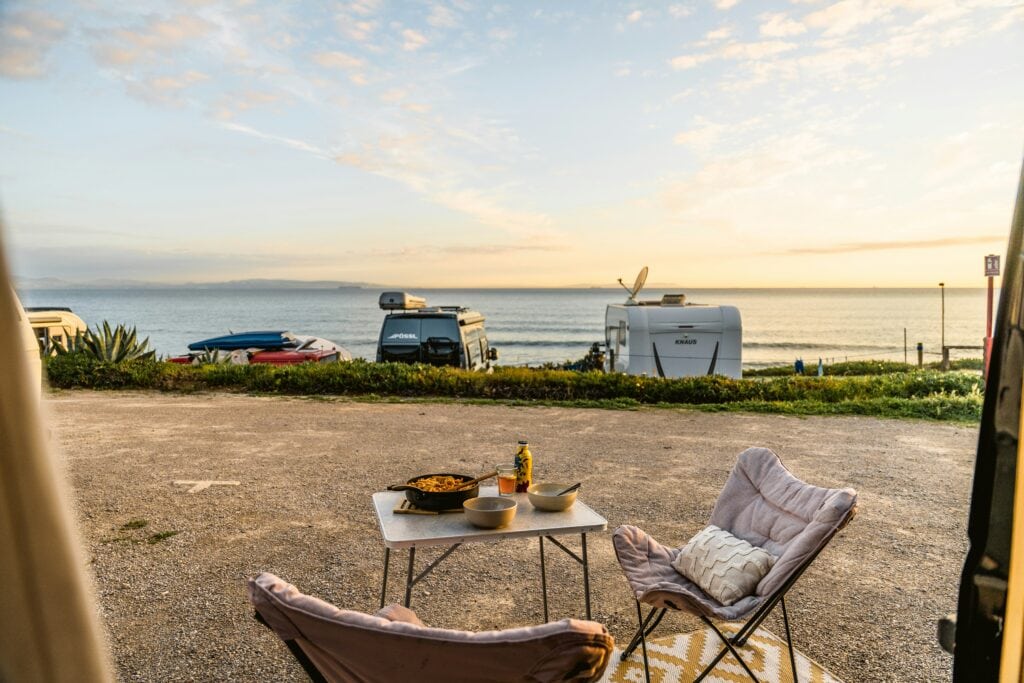
Pad type is one of the first things to ask about before booking a site on the Texas Gulf Coast. It varies from park to park along Rockport-Fulton-Aransas Pass. Some run gravel, some run grass or shell, and Coastal Cowboy’s own sites in Aransas Pass and Bayside are paved and concrete. This guide isn’t about naming one surface the winner. It’s about understanding what actually makes a pad hold up on the coast.
What Actually Determines Drainage and Stability
No single material guarantees good drainage or a stable site on its own. How a pad performs comes down to grading, base preparation, and compaction, plus how well the ground beneath was worked before the surface was installed. A gravel pad set over a properly compacted base drains and holds up very differently than gravel spread thin over loose, ungraded sand.
The same logic applies to concrete. A slab poured over a well-prepped base stays flat for years. One poured without adequate base work can crack or shift sooner. Soil conditions can also vary within the same park, since low-lying areas closer to the bay may hold more water after rain. It’s worth asking any park how a site is graded rather than assuming the pad material alone tells the whole story.
Gravel Pads
Gravel can drain well despite ground unevenness. However, its efficiency depends on installation. A gravel pad over a compacted base handles rain and rig weight better than gravel dumped without one. If you’re considering a gravel site, it’s reasonable to ask whether there’s a compacted base beneath it before assuming it will hold up during a heavy storm.
Salt air affects exposed metal hardware near the coast regardless of what surface it’s sitting on. Leveling blocks, hitches, and jacks all benefit from a regular rinse and inspection routine no matter the pad type. Our salt-air corrosion prevention guide covers a simple wash-and-rinse routine that helps protect that hardware over time.
Concrete Pads
Concrete offers a flat, consistent surface and resists corrosion caused by salt air on exposed metal. It’s part of why Coastal Cowboy’s Aransas Pass and Bayside locations run paved and concrete sites.
That said, concrete isn’t immune to ground movement. Any pad, gravel, or concrete can settle or develop cracks over time if the base underneath wasn’t properly compacted before it was built. If you’re booking a long-term site anywhere on the coast, it’s fair to ask how often the pads are inspected and maintained.
Grass and Shell Pads
Some parks in the Rockport-Fulton area offer grass or shell sites. A grass pad on a well-drained, properly graded lot can hold up in most weather conditions. Grass over a poorly graded or low-lying spot can turn soft after a hard rain. Shell pads tend to drain reasonably well, though they bring more grit and debris into an RV than smoother surfaces do.
If you’re looking at a grass or shell site, ask how it drains and when it was last graded. A rug at the entry step helps regardless of surface. Our post on outdoor rugs and sand control offers a few simple habits to keep sand and shell fragments from following you inside.
What to Ask When Booking
Rather than asking only what material a pad is made of, ask how it was built. Useful questions include how the site is graded, whether there’s a compacted base beneath it, and how it has held up during past storms. These answers tell you more about how a site will actually perform than the surface itself does.
If you’re planning a longer stay, ask how often the pads get inspected or maintained. Our long-term RV parking tips post covers a few other questions worth raising before committing to an extended booking.
Leveling Tips
- Use wide, load-rated leveling blocks that distribute weight over a larger surface area, regardless of the pad material.
- Check the site’s firmness after recent rain before you park, especially on grass, gravel, or shell.
- Treat a soft or spongy spot as a sign to reposition, not a reason to force a heavier block into place.
Book Your Stay Today!
Pad performance comes down to how well a site was graded and built long before you ever pulled in. Have questions about what’s available? Contact Coastal Cowboy RV Park, and we can walk you through the sites in Aransas Pass, Bayside, Fulton, or Rockport.